

Nearly every American student has encountered AI-powered tools while working on essays or research projects. The presence of Artificial Intelligence in university classrooms is accelerating, with over 60 percent of American schools now implementing AI for personalized learning. Understanding how these technologies shape academic writing can help students make smarter choices about content enhancement tools, ethical practices, and skill development in a rapidly changing educational environment.
Table of Contents
- Defining AI's Role In Modern Education
- Types Of AI Tools In Academic Settings
- AI-Powered Academic Writing And Learning Support
- Ethical, Legal, And Academic Integrity Challenges
- Maximizing AI Benefits While Avoiding Common Pitfalls
Key Takeaways
| Point | Details |
|---|---|
| AI Personalization | AI allows for customized learning experiences tailored to individual student needs, improving engagement and success. |
| Efficient Administrative Support | Automated tools reduce educators' workloads, enabling them to focus more on teaching and student interaction. |
| Ethical Considerations | Institutions must address ethical challenges such as data privacy and algorithmic bias to ensure responsible AI use in education. |
| Continuous Learning | Ongoing AI literacy for both educators and students is vital to fully leverage AI technologies and maintain academic integrity. |
Defining AI's Role in Modern Education
Artificial Intelligence is fundamentally transforming the landscape of academic learning, reshaping how students engage with educational content and how educators deliver instruction. AI is becoming integral in education by introducing sophisticated personalization and adaptive learning technologies that go far beyond traditional classroom methods.
The emergence of AI in educational settings represents a profound paradigm shift. Modern AI systems enable unprecedented levels of customized learning experiences, allowing students to progress at their individual pace and receive targeted support precisely when needed. This approach moves education from a one-size-fits-all model to a dynamic, responsive framework that recognizes each learner's unique strengths, challenges, and potential. Transformative educational practices now leverage AI to create more interactive, student-centered learning environments.
Key transformative elements of AI in education include:
- Personalized Learning Paths: AI algorithms analyze individual student performance to recommend tailored learning materials
- Automated Administrative Tasks: Reducing educator workload by handling grading, scheduling, and record-keeping
- Adaptive Content Delivery: Dynamically adjusting curriculum complexity based on real-time student comprehension
- Accessibility Support: Providing specialized learning assistance for students with diverse educational needs
Pro tip: Develop your AI literacy by experimenting with different educational AI tools and understanding their capabilities and limitations.
Types of AI Tools in Academic Settings
Academic settings have witnessed a remarkable transformation with the introduction of sophisticated AI tools designed to enhance learning, research, and administrative processes. Intelligent AI applications are now categorized into multiple specialized tools that address diverse educational needs and challenges.
The landscape of AI tools in academic environments encompasses several critical categories. Systematic AI tool classification reveals distinct technological solutions targeting specific academic requirements. These tools can be broadly grouped into key functional categories:
- Intelligent Tutoring Systems: Provide personalized learning experiences
- Automated Grading Tools: Streamline assessment processes
- Adaptive Learning Platforms: Dynamically adjust content difficulty
- Content Generation Tools: Assist in research and writing
- Plagiarism Detection Systems: Ensure academic integrity
- Predictive Analytics Tools: Forecast student performance and engagement
Each category of AI tool serves a unique purpose in transforming academic workflows. Intelligent tutoring systems, for instance, can analyze individual student performance and recommend customized learning paths. Automated grading tools reduce administrative burden by quickly and objectively evaluating assignments. Adaptive learning platforms use sophisticated algorithms to modify curriculum complexity in real-time, ensuring students remain appropriately challenged.
Here's a summary of how different types of AI tools impact academic environments:
| AI Tool Category | Main Purpose | Common Benefit |
|---|---|---|
| Intelligent Tutoring | Personalized learning guidance | Boosts individual success |
| Automated Grading | Fast and consistent assessment | Reduces grading workload |
| Adaptive Learning Platform | Customizes material difficulty | Sustain student interest |
| Content Generation Tools | Assists with research and writing | Streamlines workflow |
| Plagiarism Detection | Checks for originality | Upholds academic honesty |
| Predictive Analytics | Forecasts student performance | Enables early intervention |
Pro tip: Experiment with different AI academic tools to understand their strengths and limitations, and always maintain academic integrity while using these technologies.
AI-Powered Academic Writing and Learning Support
Academic writing has undergone a transformative revolution with the emergence of advanced AI-powered tools designed to support and enhance students' writing capabilities. AI writing assistants provide sophisticated support by offering real-time feedback, grammar corrections, and personalized writing improvement strategies that adapt to individual learning needs.

These intelligent systems go beyond traditional writing support by analyzing complex aspects of academic composition. Comprehensive writing support technologies now encompass multiple dimensions of academic writing, including research organization, citation management, and drafting techniques. The AI tools can identify potential grammatical errors, suggest stylistic improvements, and even help structure research papers with unprecedented precision.
Key features of AI-powered academic writing support include:
- Real-time Grammar Analysis: Instant identification and correction of writing errors
- Plagiarism Detection: Comprehensive checks for originality and proper citation
- Contextual Writing Suggestions: Intelligent recommendations for improving sentence structure and clarity
- Research Organization Tools: Assistance in structuring academic papers and managing citations
- Personalized Learning Pathways: Adaptive feedback tailored to individual writing skills
The integration of AI in academic writing support represents a significant leap forward in educational technology. These tools not only assist students in improving their writing but also help them develop critical writing skills by providing detailed, constructive feedback that traditional methods cannot match.
Pro tip: Leverage AI writing tools as learning resources, not shortcuts, and always review and understand the suggested improvements to enhance your own writing skills.
Ethical, Legal, and Academic Integrity Challenges
The rapid integration of AI technologies in academic settings has precipitated complex ethical and legal challenges that demand careful scrutiny and proactive management. Academic integrity challenges require comprehensive analysis to ensure responsible AI implementation while protecting fundamental educational principles.
Ethical dilemmas in AI education encompass multiple critical dimensions that institutions must address systematically. These challenges extend beyond simple technological considerations, touching on profound questions of privacy, fairness, intellectual honesty, and the fundamental nature of learning and academic achievement.
Key ethical and legal considerations in AI academic contexts include:
- Data Privacy: Protecting student information and preventing unauthorized data usage
- Algorithmic Bias: Identifying and mitigating potential discriminatory AI decision-making
- Intellectual Property: Clarifying ownership of AI-generated academic content
- Academic Honesty: Establishing clear guidelines for appropriate AI tool usage
- Equitable Access: Ensuring AI technologies do not create additional learning disparities
Institutions are increasingly developing sophisticated frameworks to navigate these complex challenges. This involves creating transparent usage policies, implementing robust technological safeguards, and developing comprehensive AI literacy programs that educate students about responsible AI engagement.
Pro tip: Always document and disclose your AI tool usage in academic work, and maintain a critical perspective on AI-generated content to preserve academic integrity.
Maximizing AI Benefits While Avoiding Common Pitfalls
Strategic AI integration strategies require a nuanced approach that balances technological potential with critical human oversight. The key is understanding AI as a powerful tool that enhances learning, rather than a replacement for fundamental educational processes.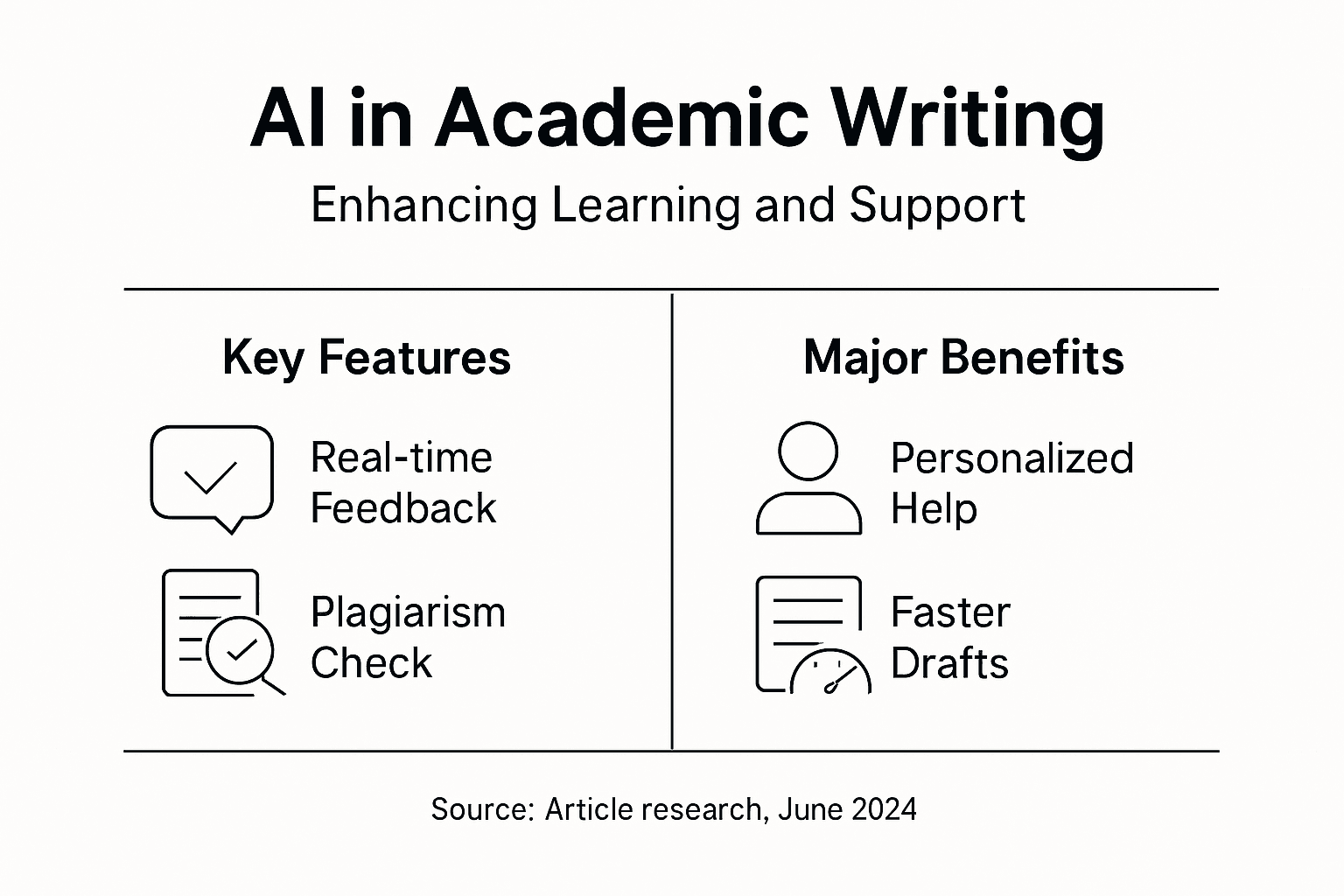
Comprehensive AI implementation guidelines emphasize the importance of developing a sophisticated, balanced framework for AI usage in academic environments. Educators and students must cultivate a deep understanding of AI's capabilities and limitations to leverage these technologies effectively.
Critical strategies for maximizing AI benefits include:
- Balanced Integration: Use AI as a supplemental learning tool, not a complete replacement for human instruction
- Continuous Learning: Develop ongoing AI literacy programs for both educators and students
- Critical Evaluation: Regularly assess AI tools for accuracy, bias, and educational effectiveness
- Ethical Framework: Establish clear guidelines for responsible AI usage
- Human-Centered Approach: Prioritize human judgment and creativity over algorithmic decision-making
Successful AI implementation requires a proactive and thoughtful approach. This means creating robust policies, providing comprehensive training, and maintaining a flexible mindset that allows for continuous adaptation as AI technologies evolve.
The table below compares strategies to maximize AI benefits and minimize risks in education:
| Strategy | Expected Outcome | Risk Minimized |
|---|---|---|
| Balanced Integration | Enhanced learning support | Overreliance on tech |
| Continuous AI Training | Improved user proficiency | Knowledge gaps |
| Regular Tool Evaluation | Increased accuracy and trust | Algorithmic bias |
| Ethical Guidelines | Clear usage expectations | Policy violations |
| Human-Centered Approach | Preserved educator involvement | Automation of judgment |
Pro tip: Approach AI tools with a critical and curious mindset, always questioning and verifying the information they provide while using them as learning enhancement resources.
Enhance Your Academic Writing with Human-Like Authenticity Powered by AI
The article highlights key challenges in academic writing such as maintaining originality, meeting strict plagiarism standards, and producing content that feels genuinely human while leveraging AI tools. If you have struggled with ensuring that AI-generated text sounds natural and passes detection tools like Turnitin or GPTZero, you are not alone. Many students and professionals face the pressure to deliver authentic academic work that aligns with ethical guidelines and preserves academic integrity.
Top Humanizer offers a solution specifically designed to overcome these hurdles by transforming AI-generated content into natural-sounding, human-like writing that can bypass AI detection algorithms without sacrificing context or meaning. With features like style customization, privacy protection, and multilingual support, our platform empowers you to confidently refine your academic papers and research documents, ensuring compliance with the ethical standards discussed in the article.
Enhance your academic writing now with Top Humanizer and experience seamless, authentic content transformation:
Don’t let AI detection concerns hold you back from achieving your writing goals. Visit Top Humanizer today to start producing high-quality, undetectable writing that respects academic honesty. Transform your AI-assisted drafts into polished, personalized papers with ease.
Frequently Asked Questions
What is the role of AI in transforming academic writing?
AI plays a significant role in transforming academic writing by providing tools that offer real-time feedback, grammar corrections, and personalized writing improvement strategies tailored to individual learning needs.
How can AI tools assist students in improving their writing skills?
AI tools assist students by analyzing various aspects of academic composition, providing contextual writing suggestions, and offering personalized feedback that helps develop critical writing skills beyond traditional methods.
What features do AI-powered writing support tools typically include?
Common features of AI-powered writing support tools include real-time grammar analysis, plagiarism detection, contextual writing suggestions, research organization assistance, and personalized learning pathways.
What ethical considerations should be kept in mind when using AI tools in academic writing?
When using AI tools, it is important to consider ethical issues such as data privacy, algorithmic bias, intellectual property rights, maintaining academic integrity, and ensuring equitable access to these technologies.
 March 27, 2026
 January 29, 2026